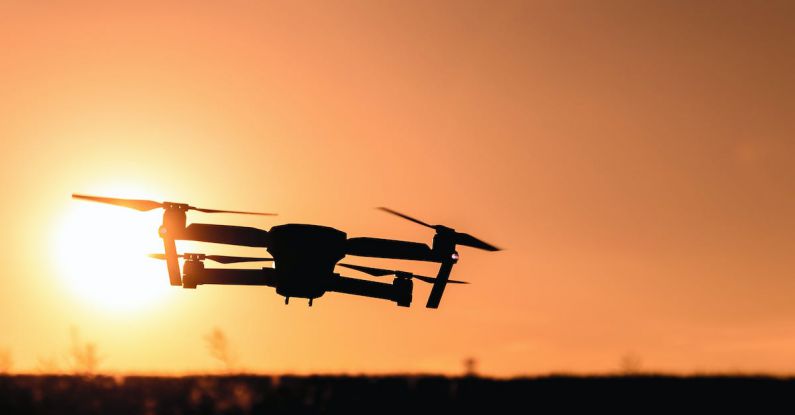
Unmanned aerial vehicles, commonly known as drones, have been making significant strides in various industries, including construction. These flying machines have revolutionized the way tasks are carried out in the construction sector, providing innovative solutions for surveying, monitoring, and data collection. However, the question arises: are drones considered robots in construction technology?
The Role of Drones in Construction
Drones have become indispensable tools in modern construction projects. These aerial vehicles equipped with cameras and sensors can capture high-resolution images and videos of construction sites from different angles, providing valuable insights to project managers and stakeholders. By utilizing drones, construction companies can efficiently monitor progress, identify potential safety hazards, and make informed decisions in real-time.
The Advantages of Using Drones
One of the main advantages of using drones in construction is their ability to access hard-to-reach areas safely. Drones can fly over tall structures or hazardous terrain, eliminating the need for manual inspections that could pose risks to workers. Moreover, drones can cover large areas in a fraction of the time it would take human labor, increasing efficiency and productivity on construction sites.
Drones also offer cost-effective solutions for surveying and mapping. Traditional surveying methods can be time-consuming and labor-intensive, requiring significant resources to gather accurate data. In contrast, drones can quickly capture detailed aerial images and create 3D models of construction sites, reducing surveying costs and improving overall project accuracy.
Are Drones Considered Robots?
While drones share similarities with robots in terms of automation and remote control capabilities, they are not typically classified as robots in the context of construction technology. Robots are generally defined as programmable machines capable of carrying out tasks autonomously, with sensors and actuators that enable them to interact with their environment.
In contrast, drones are primarily used for aerial surveillance, data collection, and monitoring purposes in construction. While they can be automated to follow pre-defined flight paths and capture specific data, drones lack the physical manipulation and dexterity associated with traditional construction robots. Robots in construction are more likely to be robotic arms or machines that can perform tasks such as bricklaying, welding, or 3D printing structures.
The Future of Robotics in Construction
As technology continues to advance, the line between drones and robots in construction may become increasingly blurred. Researchers and engineers are exploring the integration of robotics and drones to create more versatile and adaptive systems for construction applications. For example, some companies are developing drone-based robotic systems that can perform tasks such as placing building components or conducting maintenance work in challenging environments.
The integration of drones and robots in construction technology has the potential to revolutionize how buildings are designed, constructed, and maintained in the future. By combining the aerial capabilities of drones with the precision and versatility of robotic systems, construction companies can streamline processes, improve safety, and enhance overall project outcomes.
In conclusion, while drones are valuable tools in construction technology, they are not typically considered robots due to their primary focus on aerial surveillance and data collection. However, the boundaries between drones and robots in construction are gradually blurring as technology evolves, leading to innovative solutions that promise to reshape the industry. As construction companies continue to embrace automation and robotics, the role of drones and robots in shaping the future of construction remains an exciting area to watch.